

Pride Month reading list? These 9 books prove LGBTQ stories from Asia hit differently
Karen Noronha | Jun 05, 2026, 09:27 IST
These LGBTQ-focused stories by Asian authors don't exist to explain identity; they sit in the uncomfortable spaces between culture and desire, family and freedom.

Image credit : If you're looking for LGBTQ books, these titles by Asian authors are anything but predictable.
There is a different kind of queer literature emerging from Asia and its diaspora - one that doesn't announce itself loudly, but instead unfolds in fragments, silences, myths, and private rebellions. These stories don't exist to explain identity; they complicate it. They sit in the uncomfortable spaces between culture and desire, family and freedom, history and self-invention.
![]()
This Pride Month, these nine books offer something less like representation and more like reckoning - where queerness is not a category, but a shifting experience shaped by place, language, and inheritance.
![Hodder & Stoughton | 'Last Night at the Telegraph Club' by Malinda Lo]()
San Francisco in the 1950s is a city of shadows - political paranoia on one side, hidden freedoms on the other. Lily Hu exists carefully within that tension until a chance encounter with a lesbian nightclub in Chinatown disrupts everything she has been taught to contain.
What follows is not rebellion in the dramatic sense, but something quieter and more dangerous: recognition. Malinda Lo builds Lily's coming-of-age through restraint, letting fear and desire sit side by side in a world where being seen can cost everything.
![Corsair | 'The Sympathiser' by Viet Thanh Nguyen]()
A man trained to live in contradiction moves through war, ideology, and betrayal as a double agent whose identity is never stable. Within this carefully controlled fragmentation, his bisexuality exists not as revelation, but as another layer of divided selfhood.
Viet Thanh Nguyen uses espionage as emotional architecture - where loyalty, morality, and desire constantly collapse into one another. Nothing in this world is singular, and neither is the narrator.
![John Murray Publishers Ltd | 'Shoko's Smile' by Choi Eunyoung]()
Across these stories, connection rarely arrives in clear or permanent forms. Instead, it appears as memory, distance, and emotional residue - especially in relationships between women that are never fully defined but deeply felt.
In "Xin Chào, Shoko," intimacy is shaped by geography and silence, where affection survives through what cannot be said. Choi Eunyoung writes with precision that refuses spectacle, turning understatement into emotional weight.
Taipei becomes a restless emotional landscape in this fragmented diary of Lazi, a student navigating lesbian desire, alienation, and self-doubt. The narrative doesn’t progress so much as it unravels, circling identity without ever settling it.
Qiu Miaojin constructs a world where longing is unstable and the self is constantly under construction. What emerges is not resolution, but emotional volatility turned into literature.
A woman makes a pact for mobility and enters a story that refuses to stay still. Every path branches into another possibility, where travel becomes both liberation and trap.
Intan Paramaditha turns narrative itself into choice and consequence, where identity is not discovered but repeatedly rewritten. Queerness appears not as declaration, but as movement through shifting forms of agency and desire.
Myth and modern life collide as a bisexual boy in Canada grows alongside the stories of Parvati and Shiva. The divine and the everyday begin to mirror each other until neither can be separated.
Vivek Shraya's writing dissolves boundaries between gender, belief, and narrative structure. What remains is a fluid space where identity is constantly being remade rather than defined.
After a death, Mei returns to a place that is both familiar and estranged, carrying grief that does not resolve into closure. Her presence in this space becomes a quiet negotiation between memory and survival.
Jia Qing Wilson-Yang resists dramatic arcs, instead building meaning through stillness. Trans identity here is not explained - it is lived, observed, and slowly understood through fragments of everyday existence.
A journey to Manila becomes an excavation of truth, loss, and political violence as a Filipino American teenager searches for understanding after his cousin's death. Every discovery complicates what he thought he knew about justice and family.
Within this layered narrative, queerness appears subtly through a character treated with care rather than emphasis. Randy Ribay weaves identity into a broader meditation on diaspora and moral uncertainty.
Two teenagers compete through business, culture, and pride until rivalry slowly shifts into something more fragile and unfamiliar. Attraction enters where competition once stood, complicating everything they thought they understood about each other.
Adiba Jaigirdar frames queer love not as rupture but as discovery within cultural expectation. The result is tender, grounded, and shaped by the pressures of belonging.

This Pride Month, these nine books offer something less like representation and more like reckoning - where queerness is not a category, but a shifting experience shaped by place, language, and inheritance.
'Last Night at the Telegraph Club' by Malinda Lo
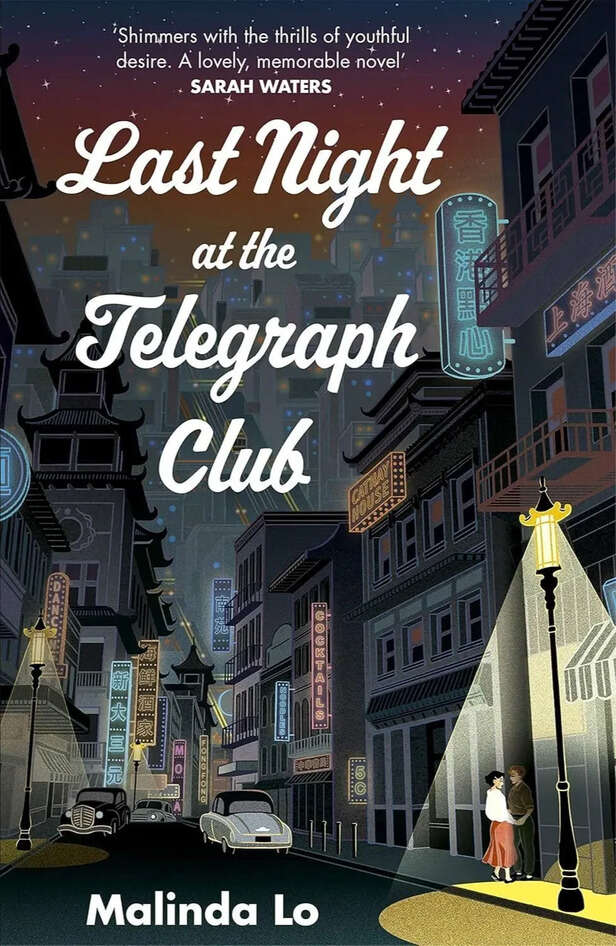
Image credit : Hodder & Stoughton | 'Last Night at the Telegraph Club' by Malinda Lo
San Francisco in the 1950s is a city of shadows - political paranoia on one side, hidden freedoms on the other. Lily Hu exists carefully within that tension until a chance encounter with a lesbian nightclub in Chinatown disrupts everything she has been taught to contain.
What follows is not rebellion in the dramatic sense, but something quieter and more dangerous: recognition. Malinda Lo builds Lily's coming-of-age through restraint, letting fear and desire sit side by side in a world where being seen can cost everything.
'The Sympathiser' by Viet Thanh Nguyen
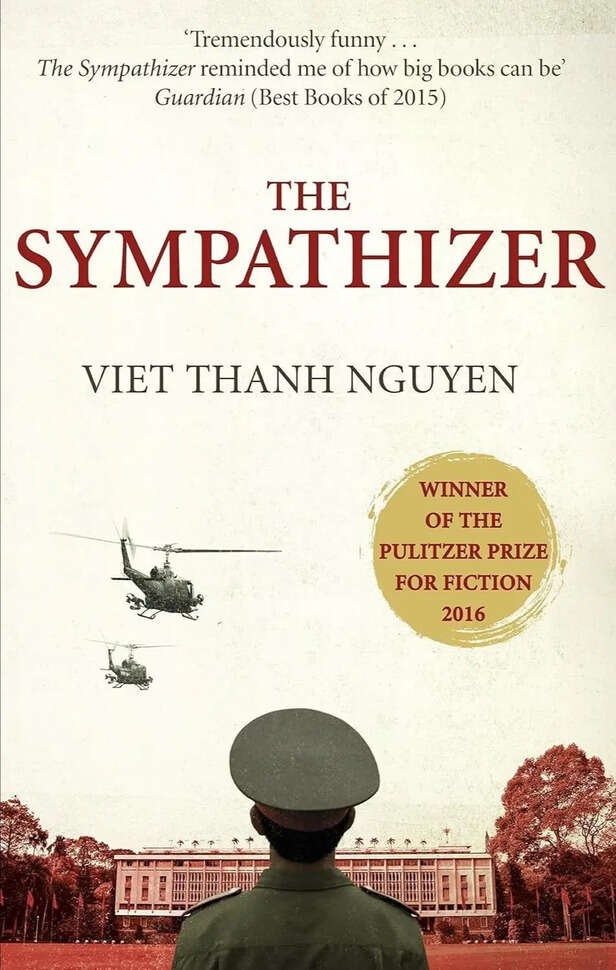
Image credit : Corsair | 'The Sympathiser' by Viet Thanh Nguyen
A man trained to live in contradiction moves through war, ideology, and betrayal as a double agent whose identity is never stable. Within this carefully controlled fragmentation, his bisexuality exists not as revelation, but as another layer of divided selfhood.
Viet Thanh Nguyen uses espionage as emotional architecture - where loyalty, morality, and desire constantly collapse into one another. Nothing in this world is singular, and neither is the narrator.
'Shoko's Smile' by Choi Eunyoung
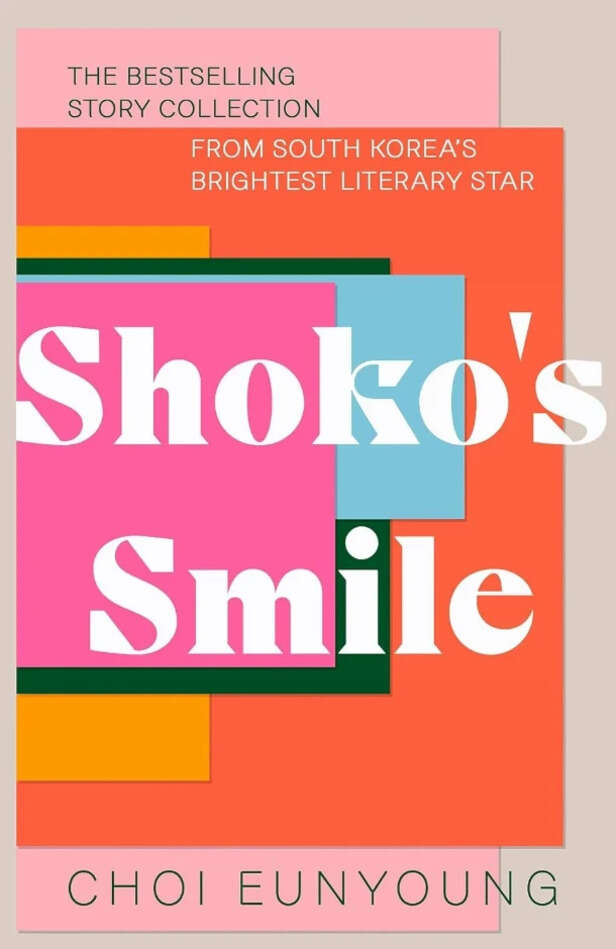
Image credit : John Murray Publishers Ltd | 'Shoko's Smile' by Choi Eunyoung
Across these stories, connection rarely arrives in clear or permanent forms. Instead, it appears as memory, distance, and emotional residue - especially in relationships between women that are never fully defined but deeply felt.
In "Xin Chào, Shoko," intimacy is shaped by geography and silence, where affection survives through what cannot be said. Choi Eunyoung writes with precision that refuses spectacle, turning understatement into emotional weight.
'Notes of a Crocodile' by Qiu Miaojie
Qiu Miaojin constructs a world where longing is unstable and the self is constantly under construction. What emerges is not resolution, but emotional volatility turned into literature.
'The Wandering' by Intan Paramaditha
Intan Paramaditha turns narrative itself into choice and consequence, where identity is not discovered but repeatedly rewritten. Queerness appears not as declaration, but as movement through shifting forms of agency and desire.
'She of the Mountains' by Vivek Shraya
Vivek Shraya's writing dissolves boundaries between gender, belief, and narrative structure. What remains is a fluid space where identity is constantly being remade rather than defined.
'Small Beauty' by Jia Qing Wilson-Yang
Jia Qing Wilson-Yang resists dramatic arcs, instead building meaning through stillness. Trans identity here is not explained - it is lived, observed, and slowly understood through fragments of everyday existence.
'Patron Saints of Nothing' by Randy Ribay
Within this layered narrative, queerness appears subtly through a character treated with care rather than emphasis. Randy Ribay weaves identity into a broader meditation on diaspora and moral uncertainty.
'The Henna Wars' by Adiba Jaigirdar
Adiba Jaigirdar frames queer love not as rupture but as discovery within cultural expectation. The result is tender, grounded, and shaped by the pressures of belonging.

Trump under pressure: US House passes Iran War resolution — Will Republicans in the Senate follow?
By Nancy Jaiswal

These K-dramas confront loneliness, grief and survival
By Karen Noronha

SpaceX neo cloud strategy: Why Anthropic’s claude is turning to Elon Musk’s colossus data centers for critical AI compute
By Nancy Jaiswal

Erika Kirk UFC Freedom 250 host rumour sparks major fan theories
By Sinthya Banik

China's famous border collie allegedly stolen, sold, and eaten
By Karen Noronha

Waiting for Love For You? Watch Song Wei Long's best C-dramas
By Karen Noronha

Fans troll Elon Musk after transgender daughter Vivian exits interview
By Sinthya Banik


