
Straight out of 'Stranger Things': Scientists build living walls that grow and heal
Sneha Kumari | Mar 16, 2026, 15:12 IST
Scientists unveiled “living walls” made with 3D-printed hydrogel filled with cyanobacteria at the Venice Architecture Biennale 2025.

Image credit : ChatGPT AI Image | ‘Stranger Things’ IRL? Scientists Create Living Walls That Breathe and Eat Carbon
Imagine if buildings didn't just sit there collecting dust and cracks; what if they grew, healed themselves and cleaned the air at the same time?
It sounds like something straight out of Stranger Things: walls covered in vine-like patterns that feel almost alive. But scientists are now turning that idea into reality with a new kind of 'living wall' powered by microbes.
At the Venice Architecture Biennale in 2025, visitors at the Canada Pavilion came face-to-face with something unusual: 3D-printed walls filled with living cyanobacteria.
![Instagram | @_valentinamori_ | Scientists Debut Living Carbon-Eating Walls]()
The project, called Picoplanktonics, was developed by the Living Room Collective and led by biodesigner Andrea Shin Ling.
Instead of concrete or steel alone, these structures contain tiny photosynthetic microbes that survive using sunlight, humidity and air, almost like plants built directly into the walls. To keep them alive, the structures need the same basics that any living organism does: light, moisture and stable temperatures.
But in return, they do something incredible: they pull carbon dioxide out of the air.
Researchers from ETH Zurich developed the core technology behind the material. The team, including Dalia Dranseike, Yifan Cui and Mark W. Tibbitt, embedded cyanobacteria called Synechococcus sp. PCC 7002 into a specially designed hydrogel that can be 3D printed into architectural shapes.
The findings were published in Nature Communications.
Inside the gel, the microbes photosynthesise just like plants. As they grow, they capture carbon dioxide and convert it into stable minerals through a process known as microbially induced carbonate precipitation.
Over more than a year of testing, the material steadily removed carbon from the air while also becoming stronger as minerals formed within it.
Even cooler: the material lets light pass through, so the microbes inside the structure can keep photosynthesising instead of only surviving on the surface.
![Instagram | @_valentinamori_ | Scientists Create Living Walls That Grow Like Vines]()
These living materials aren't printed as flat slabs. Rather, scientists experimented with lattice and coral-like shapes, which allow more airflow and light to reach the microbes.
The result? Structures that stay green and active for long periods while holding their shape, even if the surrounding gel eventually dissolves. In many ways, the architecture is inspired by nature itself: forms that maximise surface area so living organisms can thrive inside them.
![Instagram | @_valentinamori_ | These Living Walls Grow, Breathe and Clean the Air]()
Right now, the technology is still experimental. But the idea behind it is huge. Unlike most carbon-capture systems that rely on large industrial facilities and heavy energy use, these living materials work passively, using only sunlight and natural air circulation.
That means buildings in the future could potentially absorb carbon while they stand, acting like giant vertical ecosystems rather than inert blocks of concrete.
It sounds like something straight out of Stranger Things: walls covered in vine-like patterns that feel almost alive. But scientists are now turning that idea into reality with a new kind of 'living wall' powered by microbes.
A building material that's actually alive
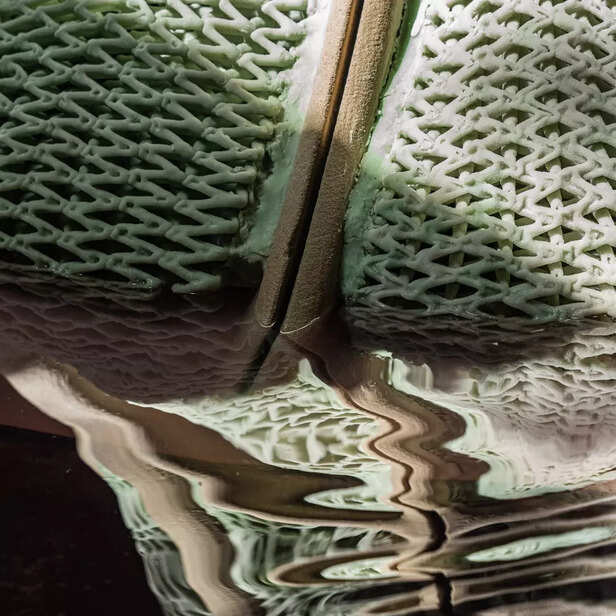
The project, called Picoplanktonics, was developed by the Living Room Collective and led by biodesigner Andrea Shin Ling.
Instead of concrete or steel alone, these structures contain tiny photosynthetic microbes that survive using sunlight, humidity and air, almost like plants built directly into the walls. To keep them alive, the structures need the same basics that any living organism does: light, moisture and stable temperatures.
But in return, they do something incredible: they pull carbon dioxide out of the air.
The science behind the 'living wall'
The findings were published in Nature Communications.
Inside the gel, the microbes photosynthesise just like plants. As they grow, they capture carbon dioxide and convert it into stable minerals through a process known as microbially induced carbonate precipitation.
Over more than a year of testing, the material steadily removed carbon from the air while also becoming stronger as minerals formed within it.
Even cooler: the material lets light pass through, so the microbes inside the structure can keep photosynthesising instead of only surviving on the surface.
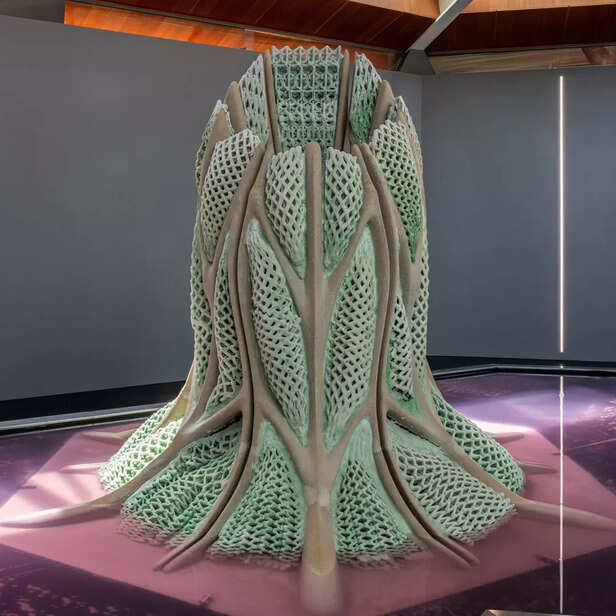
Why the design looks like coral
The result? Structures that stay green and active for long periods while holding their shape, even if the surrounding gel eventually dissolves. In many ways, the architecture is inspired by nature itself: forms that maximise surface area so living organisms can thrive inside them.
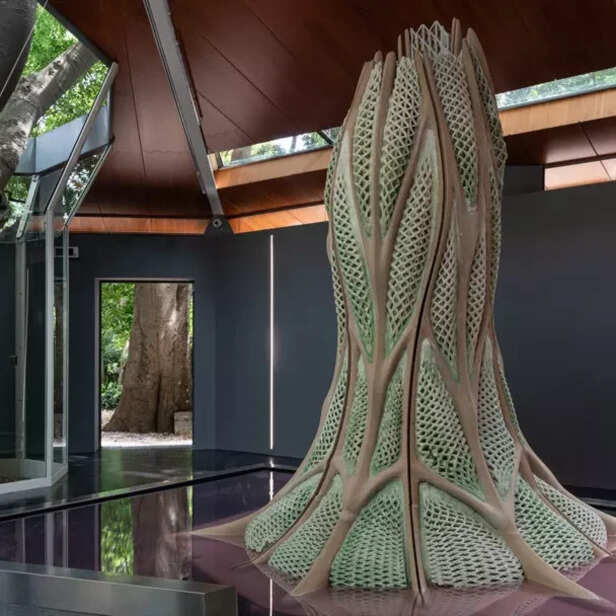
Could future buildings grow and repair themselves?
That means buildings in the future could potentially absorb carbon while they stand, acting like giant vertical ecosystems rather than inert blocks of concrete.
Diane Warren loses 17th Oscar nomination for ‘Dear Me’
By Emmy Azad

Conan O’Brien’s attempt to Gen Z-ify the Oscars is now a viral moment
By Sneha Kumari

Teyana Taylor’s Oscars backstage clash goes viral
By Emmy Azad

Ghosted but still hopeful? Welcome to delulu dating
By Saloni Jha

These dark psychological shows will mess with your head for days
By Iraa Paul

Anne Hathaway’s Oscars 2026 look sparks fan debate
By Simran Guleria

Fans react as Marty Supreme loses all 9 Oscars nominations
By Emmy Azad
