
What if forgetting facts isn't a problem at all? The Internet may be teaching brains a new memory system
Nancy Jaiswal | Jul 27, 2026, 06:45 IST
The internet has changed far more than how we search for information. Experts say it may be reshaping memory itself, turning recall into a process of finding rather than storing. Is this making us forgetful, or simply creating a new kind of memory?

Image credit : Magnific | Google effect: Is the Internet becoming our second memory bank?
There was a time when remembering things was part of everyday life. People memorised phone numbers, birthdays, addresses, directions and even long shopping lists. If you wanted information, you had to either remember it or find it in a book. Today, things work differently. A question pops into our head, and within seconds we search for the answer online. A forgotten date can be found with a quick search. A lost photograph is sitting in cloud storage. Even old conversations are preserved in chat histories.
According to research by Columbia University led by Betsy Sparrow, people tend to forget information when they believe they can easily find it on the internet later. The study found that individuals were often better at remembering where information could be found than remembering the information itself. In other words, our brains may be adapting to a world where knowledge is always just a search away.
The idea sounds simple, but it raises a fascinating question. If we are no longer storing information in the same way as previous generations, are we creating an entirely new form of memory? And if the answer is yes, what does that mean for the future of how humans think and learn?
One of the biggest changes brought by the internet is that memory is becoming less about storing facts and more about locating them. Think about how many phone numbers you know by heart today. Many people can remember only their own number and perhaps a few close family members. Everything else sits safely inside a smartphone.
![The internet has changed far more than how we search for information]()
The same thing happens with information. A student may not remember a historical date but might remember the exact website where it can be found. An employee may forget a company policy but know precisely which folder contains the document. The memory is not gone. It has simply shifted from remembering content to remembering access points.
Researchers often refer to this as the "Google Effect" or digital amnesia. The internet becomes a giant external storage system, and the brain adapts accordingly. Instead of investing energy in memorising facts, it focuses on remembering how to retrieve them when needed.
This does not necessarily mean people are becoming less intelligent. Human memory has always adapted to the tools available at a particular time. Long before the internet, people relied on notebooks, calendars, diaries and libraries to help them remember important information.
The internet has simply expanded that process on a massive scale. Search engines, cloud drives, digital notes and social media archives now hold information that once had to be stored in the mind. The difference is speed. What once took hours of searching through books can now be found in seconds.
Imagine trying to remember a recipe. Years ago, you might have memorised the ingredients. Today, you may simply save the recipe online and return to it whenever needed. The task of remembering shifts from the brain to technology.
Read More: Burned out before 30? Why more Gen Z employees are calling in for mental health and changing sick leave forever
One of the most interesting findings from the Columbia University research involved memory for locations. Participants often remembered where information was stored better than the information itself.
In one experiment, people believed information would be saved in folders. Later, they were more successful at recalling folder names than recalling the actual facts they had typed. This suggests that the brain may treat digital storage locations as part of its memory system.
![There was a time when remembering things was part of everyday life]() Think about your own habits. You may not remember every photograph from a holiday, but you probably know it is stored in a specific album. You may not recall an exact work document, but you know which folder contains it. The location becomes the memory cue.
Think about your own habits. You may not remember every photograph from a holiday, but you probably know it is stored in a specific album. You may not recall an exact work document, but you know which folder contains it. The location becomes the memory cue.
This is a major shift from traditional memory. Instead of storing every detail, the brain stores pathways to those details.
While some experts see benefits in this new memory system, there are concerns too. The internet constantly competes for attention. Notifications, messages, videos and endless scrolling can make it harder to focus on a single task.
Memory and attention are closely connected. People tend to remember information better when they give it their full focus. When attention jumps from one thing to another, information may not stay in memory long enough to become deeply stored.
Think about reading a long article while checking messages every few minutes. You may finish the article but struggle to remember what it said. The information was seen, but it never fully settled in the mind.
This does not mean the internet is damaging memory. It simply means that the environment in which memory operates has changed dramatically.
There is another side to this story. While individuals may rely less on personal memory, society as a whole may be remembering more than ever before.
The internet preserves enormous amounts of information. Photos, videos, news reports, family histories and personal experiences can remain accessible for years. Events that might once have disappeared from public memory are now stored in digital archives.
Social media has also created a form of shared memory. People collectively document events as they happen. Birthdays, celebrations, sporting moments and historic events are captured and stored across networks that millions can access.
In this sense, memory is becoming collective rather than purely individual. Knowledge is no longer held only inside one person's mind. It exists across interconnected systems and communities.
The evidence suggests that something significant is changing. Humans are not simply forgetting more. Instead, they may be remembering differently. The internet has become an extension of memory, helping people store, organise and retrieve information in ways that were impossible just a few decades ago.
![One of the biggest changes brought by the internet is that memory is becoming less about storing facts]() Rather than memorising every fact, many people now memorise routes to information. Instead of holding details internally, they rely on external digital systems. Memory becomes less about storage and more about access.
Rather than memorising every fact, many people now memorise routes to information. Instead of holding details internally, they rely on external digital systems. Memory becomes less about storage and more about access.
That does not mean human memory is disappearing. It means it is adapting, just as it has throughout history whenever new tools emerged. The internet may not be replacing memory, but it is certainly reshaping it.
And perhaps that is the most fascinating part of all. The future of memory may not live entirely inside our heads. It may exist somewhere between the human brain and the digital world we carry in our pockets every day.
Read More: The new dating paradox: Why people who need nobody may be struggling the most to build lasting relationships
According to research by Columbia University led by Betsy Sparrow, people tend to forget information when they believe they can easily find it on the internet later. The study found that individuals were often better at remembering where information could be found than remembering the information itself. In other words, our brains may be adapting to a world where knowledge is always just a search away.
The idea sounds simple, but it raises a fascinating question. If we are no longer storing information in the same way as previous generations, are we creating an entirely new form of memory? And if the answer is yes, what does that mean for the future of how humans think and learn?
From remembering facts to remembering locations

Image credit : Magnific | The internet has changed far more than how we search for information
Researchers often refer to this as the "Google Effect" or digital amnesia. The internet becomes a giant external storage system, and the brain adapts accordingly. Instead of investing energy in memorising facts, it focuses on remembering how to retrieve them when needed.
The brain is learning new rules
The internet has simply expanded that process on a massive scale. Search engines, cloud drives, digital notes and social media archives now hold information that once had to be stored in the mind. The difference is speed. What once took hours of searching through books can now be found in seconds.
Imagine trying to remember a recipe. Years ago, you might have memorised the ingredients. Today, you may simply save the recipe online and return to it whenever needed. The task of remembering shifts from the brain to technology.
Read More: Burned out before 30? Why more Gen Z employees are calling in for mental health and changing sick leave forever
Why we remember folders better than facts
In one experiment, people believed information would be saved in folders. Later, they were more successful at recalling folder names than recalling the actual facts they had typed. This suggests that the brain may treat digital storage locations as part of its memory system.
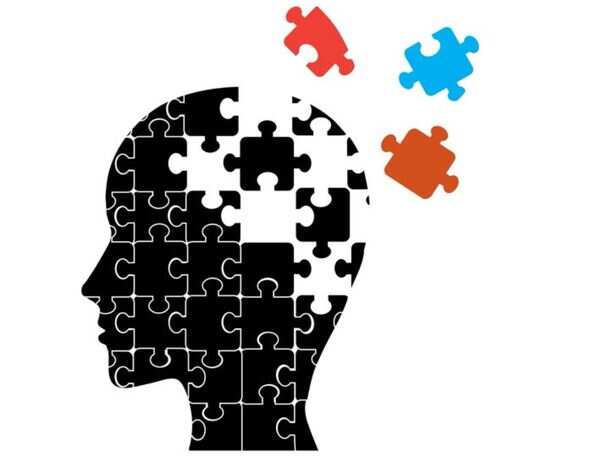
Image credit : Pexels | There was a time when remembering things was part of everyday life
This is a major shift from traditional memory. Instead of storing every detail, the brain stores pathways to those details.
The attention problem
Memory and attention are closely connected. People tend to remember information better when they give it their full focus. When attention jumps from one thing to another, information may not stay in memory long enough to become deeply stored.
Think about reading a long article while checking messages every few minutes. You may finish the article but struggle to remember what it said. The information was seen, but it never fully settled in the mind.
This does not mean the internet is damaging memory. It simply means that the environment in which memory operates has changed dramatically.
The rise of collective memory
The internet preserves enormous amounts of information. Photos, videos, news reports, family histories and personal experiences can remain accessible for years. Events that might once have disappeared from public memory are now stored in digital archives.
Social media has also created a form of shared memory. People collectively document events as they happen. Birthdays, celebrations, sporting moments and historic events are captured and stored across networks that millions can access.
In this sense, memory is becoming collective rather than purely individual. Knowledge is no longer held only inside one person's mind. It exists across interconnected systems and communities.
So, is the Internet creating a new type of memory?
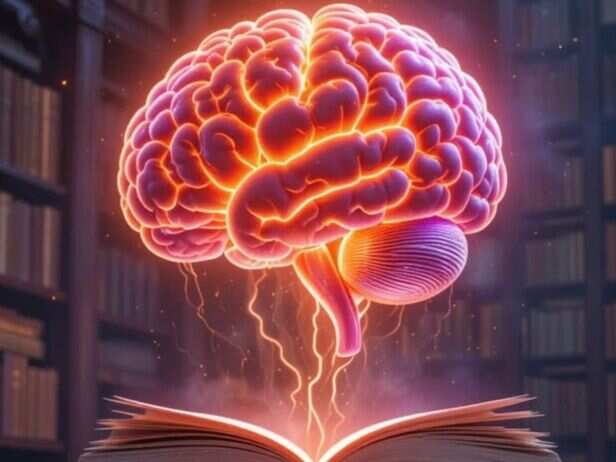
Image credit : Pexels | One of the biggest changes brought by the internet is that memory is becoming less about storing facts
That does not mean human memory is disappearing. It means it is adapting, just as it has throughout history whenever new tools emerged. The internet may not be replacing memory, but it is certainly reshaping it.
And perhaps that is the most fascinating part of all. The future of memory may not live entirely inside our heads. It may exist somewhere between the human brain and the digital world we carry in our pockets every day.
Read More: The new dating paradox: Why people who need nobody may be struggling the most to build lasting relationships
Could sudden smell loss be telling you something very important?
By Nancy Jaiswal

The Westies S1E4 recap: Irish vendettas, mob hits & drug deals!
By Sinthya Banik

KATSEYE's Lara Raj faces 'performative' backlash over delayed support for Indian students
By Shivani Negi

Lewis Hamilton's Ferrari nightmare is getting worse with every race
By Nillohit Bagchi

HOTD S3E6 spoilers: Death at Butcher's Ball & book predictions!
By Sinthya Banik

Who is DiJonai Carrington? Chicago Sky star accuses ex NaLyssa Smith of cheating with Deja Kelly, Aaliyah Nye and multiple WNBA players
By Nillohit Bagchi

Is Love Island USA's Nic Vansteenberghe close to D4vd?
By Shivani Negi
