

Internet reacts as Amazon driver shares packed delivery van and 400-stop route, with many questioning if the system pushes workers towards burnout
Simran Guleria | Apr 19, 2026, 21:20 IST
An Amazon driver’s viral video revealing over 500 packages and hundreds of delivery stops in a single shift has sparked a heated debate online, raising concerns about workload, pay disparity, and burnout in the gig economy.

A single viral video has reignited a familiar debate about the realities of gig work, after an Amazon delivery driver revealed what she called a “typical” shift. What begins as a routine clip quickly unfolds into a striking snapshot of scale, pressure, and the fine line between efficiency and exhaustion.
Originally shared on TikTok by user @abbykaddaby, the video captures the driver walking viewers through her daily route. The numbers alone are enough to raise eyebrows. More than 500 packages, over 300 stops, and deliveries spread across hundreds of locations, all expected to be completed within a single shift. As the camera pans across the van, shelves appear crammed to the ceiling, leaving barely any space to move, let alone organise parcels with ease.
![X| Amazon route video divides internet opinion]()
The clip soon found its way onto X, where it gained traction and sparked a wave of reactions. What stood out was not just the volume of deliveries, but the framing of it as “normal”, prompting many to question whether such workloads are sustainable or quietly excessive.
The online response has been sharply divided. Some users praised the logistical precision behind such tightly packed routes, calling it a testament to advanced delivery algorithms and route optimisation. For them, the system reflects efficiency at scale, where careful planning ensures that stops follow a logical sequence, making the workload manageable with the right pace.
Others, however, were far less convinced. Several users pointed out the sheer maths behind the task. One calculation suggested that completing over 400 stops within an eight-hour shift would require nearly one delivery per minute, a pace many described as unrealistic. The concern was not just about speed, but about the physical and mental toll such expectations could create over time.
![X| 500 packages a day? Internet questions workload]()
Comparisons with other courier services also surfaced, with some noting that drivers at competing firms have handled similar volumes for years. Yet, the conversation quickly shifted to pay disparities, with claims that Amazon drivers often earn significantly less per hour than their counterparts, despite facing comparable demands.
Beyond the numbers, the video has tapped into a deeper discussion about the gig economy itself. Critics argue that such workloads, even if technically achievable, may come at the cost of worker wellbeing. The pressure to meet tight deadlines, navigate traffic, and manage high parcel volumes daily can contribute to fatigue and long-term burnout.
Supporters of the system, on the other hand, maintain that demanding roles are not new to the logistics industry. They suggest that efficiency, experience, and familiarity with routes can make a significant difference in handling such workloads.
Still, the viral clip has succeeded in doing what many similar posts aim to achieve. It has brought a behind-the-scenes reality into public view, forcing viewers to reconsider what goes into the convenience of next-day deliveries. Whether seen as impressive coordination or a cause for concern, the video has ensured that the conversation around workload, fairness, and sustainability in gig work remains far from settled.
Originally shared on TikTok by user @abbykaddaby, the video captures the driver walking viewers through her daily route. The numbers alone are enough to raise eyebrows. More than 500 packages, over 300 stops, and deliveries spread across hundreds of locations, all expected to be completed within a single shift. As the camera pans across the van, shelves appear crammed to the ceiling, leaving barely any space to move, let alone organise parcels with ease.

Image credit : X| Amazon route video divides internet opinion
The clip soon found its way onto X, where it gained traction and sparked a wave of reactions. What stood out was not just the volume of deliveries, but the framing of it as “normal”, prompting many to question whether such workloads are sustainable or quietly excessive.
🚨 AMAZON DRIVER EXPOSES 300 STOPS IN ONE SHIFT — THEN SHOWS HER TRUCK AND PEOPLE CAN’T BELIEVE THIS IS WHAT’S EXPECTED
An Amazon driver shows her route on her phone… then turns the camera to her truck and it’s overflowing.
• 300 stops
• 524 packages
• 421 locations
•… pic.twitter.com/TVTu8qduhQ
— HustleBitch (@HustleBitch_) April 16, 2026
A ‘normal’ day or too much to handle?
The online response has been sharply divided. Some users praised the logistical precision behind such tightly packed routes, calling it a testament to advanced delivery algorithms and route optimisation. For them, the system reflects efficiency at scale, where careful planning ensures that stops follow a logical sequence, making the workload manageable with the right pace.
Others, however, were far less convinced. Several users pointed out the sheer maths behind the task. One calculation suggested that completing over 400 stops within an eight-hour shift would require nearly one delivery per minute, a pace many described as unrealistic. The concern was not just about speed, but about the physical and mental toll such expectations could create over time.
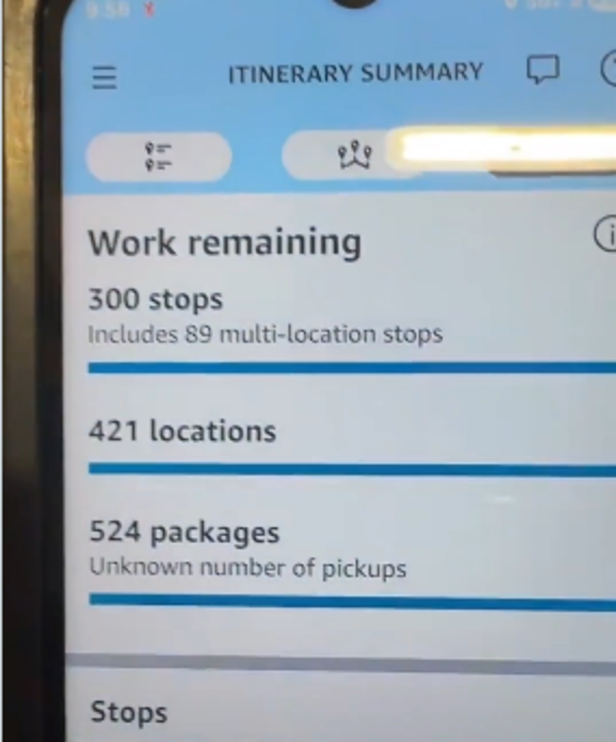
Image credit : X| 500 packages a day? Internet questions workload
Comparisons with other courier services also surfaced, with some noting that drivers at competing firms have handled similar volumes for years. Yet, the conversation quickly shifted to pay disparities, with claims that Amazon drivers often earn significantly less per hour than their counterparts, despite facing comparable demands.
Pay, pressure and the burnout debate
Beyond the numbers, the video has tapped into a deeper discussion about the gig economy itself. Critics argue that such workloads, even if technically achievable, may come at the cost of worker wellbeing. The pressure to meet tight deadlines, navigate traffic, and manage high parcel volumes daily can contribute to fatigue and long-term burnout.
Supporters of the system, on the other hand, maintain that demanding roles are not new to the logistics industry. They suggest that efficiency, experience, and familiarity with routes can make a significant difference in handling such workloads.
Still, the viral clip has succeeded in doing what many similar posts aim to achieve. It has brought a behind-the-scenes reality into public view, forcing viewers to reconsider what goes into the convenience of next-day deliveries. Whether seen as impressive coordination or a cause for concern, the video has ensured that the conversation around workload, fairness, and sustainability in gig work remains far from settled.

When did Eric Dane film his final scenes? Euphoria season 3 episode 2 sparks fresh interest
By Simran Guleria

Patrick Muldoon’s final message goes viral after sudden heart attack
By Simran Guleria

Ryan Reynolds debunks marriage trouble rumours with Blake Lively amid Justin Baldoni legal dispute
By Simran Guleria

Viral Lego animation mocking Erika Kirk linked to US origin, not Iran, as online theories unravel
By Simran Guleria

Is Free Fire MAX Undersea Splatter Event live?
By Sneha Kumari

Is the viral video of Israeli soldier smashing Jesus statue in Lebanon real?
By Sneha Kumari

Who was Shamar Elkins?
By Sneha Kumari


