
Met Police clear air on Indian restaurant owner’s arrest, say viral video with threats led to action, not ‘no halal’ stance amid protests and backlash
Simran Guleria | Mar 17, 2026, 18:30 IST
Met Police address the controversy around an Indian restaurateur’s arrest, confirming it stemmed from a video with threats rather than the ‘no halal’ policy that triggered protests outside his London restaurant.

The arrest of an Indian-origin restaurant owner in London has ignited a heated online debate, with many questioning whether his stance on halal food led to police action. However, the Metropolitan Police has now clarified that the situation is far more complex than it initially appeared.
At the centre of the controversy is Harman Singh Kapoor, who runs the restaurant Rangrez with his wife. His decision to refuse halal meat, coupled with provocative remarks directed at a religious community, drew sustained protests outside his establishment in recent weeks. As tensions escalated, footage of his brief detention spread rapidly online, fuelling claims that he had been arrested simply for his business choices.
![X| @NewsAlgebraIND| Indian restaurateur arrest tied to video, not halal policy]()
According to an official statement, Kapoor was taken into custody on 14 March on suspicion of malicious communication. The police emphasised that the arrest was linked not to his restaurant policy but to a video he shared on social media that contained threats of violence. In the video, Kapoor alleged that he and his family had been subjected to repeated harassment and insufficient protection from authorities. He went on to issue strong warnings, stating that he would defend his family and was no longer afraid to retaliate against those he perceived as threats. These remarks, which included references to killing, prompted police intervention.
Officers arrived at the restaurant in Fulham and detained the 54-year-old before releasing him on bail pending further enquiries. Despite the clarification, the incident quickly became a flashpoint online, with sharply divided reactions over freedom of expression, public safety, and policing priorities.
Kapoor, in subsequent posts, maintained that he had been unfairly targeted. He claimed that instead of offering protection, authorities had acted against him and even accused them of bias against his Sikh identity. His statements have added another layer of complexity to an already sensitive issue.
The controversy did not emerge overnight. It traces back to February, when Kapoor announced that he had been forced to shut his restaurant temporarily due to ongoing harassment and disturbances. He attributed these issues to backlash over a sign outside his establishment stating that halal food was not served.
![X| @kingkapoor72| Met Police explain arrest amid ‘no halal’ controversy]()
Soon after, videos surfaced showing confrontations between Kapoor and protesters gathered outside the restaurant. These incidents amplified the issue, drawing attention both within the UK and internationally. For some, the case represents a question of a business owner’s right to choose what they serve. For others, it raises concerns about language, community relations, and the potential for escalation when rhetoric turns hostile.
While the police have drawn a clear distinction between Kapoor’s business decisions and the grounds for his arrest, the broader debate shows no signs of fading. The incident sits at the intersection of free speech, cultural sensitivity, and law enforcement responsibilities, making it far more than a local dispute.
![X| @shilpa_cn| London arrest row clarified as police cite threatening video]()
As enquiries continue, the case serves as a reminder of how quickly local tensions can gain global attention in the digital age. It also highlights the importance of separating verified facts from assumptions, particularly when social media narratives begin to shape public opinion before official details emerge.
At the centre of the controversy is Harman Singh Kapoor, who runs the restaurant Rangrez with his wife. His decision to refuse halal meat, coupled with provocative remarks directed at a religious community, drew sustained protests outside his establishment in recent weeks. As tensions escalated, footage of his brief detention spread rapidly online, fuelling claims that he had been arrested simply for his business choices.
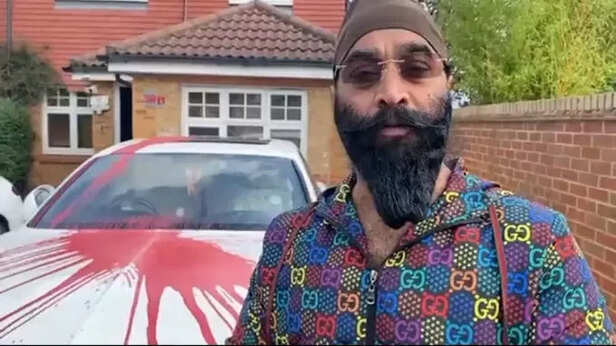
Image credit : X| @NewsAlgebraIND| Indian restaurateur arrest tied to video, not halal policy
What led to the arrest of the restaurant owner
According to an official statement, Kapoor was taken into custody on 14 March on suspicion of malicious communication. The police emphasised that the arrest was linked not to his restaurant policy but to a video he shared on social media that contained threats of violence. In the video, Kapoor alleged that he and his family had been subjected to repeated harassment and insufficient protection from authorities. He went on to issue strong warnings, stating that he would defend his family and was no longer afraid to retaliate against those he perceived as threats. These remarks, which included references to killing, prompted police intervention.
Officers arrived at the restaurant in Fulham and detained the 54-year-old before releasing him on bail pending further enquiries. Despite the clarification, the incident quickly became a flashpoint online, with sharply divided reactions over freedom of expression, public safety, and policing priorities.
Kapoor, in subsequent posts, maintained that he had been unfairly targeted. He claimed that instead of offering protection, authorities had acted against him and even accused them of bias against his Sikh identity. His statements have added another layer of complexity to an already sensitive issue.
Protests, policy and public reaction
The controversy did not emerge overnight. It traces back to February, when Kapoor announced that he had been forced to shut his restaurant temporarily due to ongoing harassment and disturbances. He attributed these issues to backlash over a sign outside his establishment stating that halal food was not served.
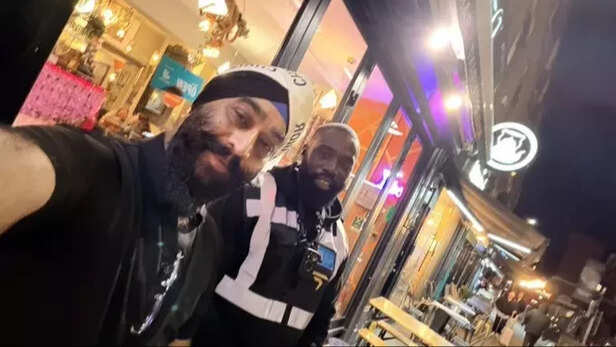
Image credit : X| @kingkapoor72| Met Police explain arrest amid ‘no halal’ controversy
Soon after, videos surfaced showing confrontations between Kapoor and protesters gathered outside the restaurant. These incidents amplified the issue, drawing attention both within the UK and internationally. For some, the case represents a question of a business owner’s right to choose what they serve. For others, it raises concerns about language, community relations, and the potential for escalation when rhetoric turns hostile.
A case that raises wider questions
While the police have drawn a clear distinction between Kapoor’s business decisions and the grounds for his arrest, the broader debate shows no signs of fading. The incident sits at the intersection of free speech, cultural sensitivity, and law enforcement responsibilities, making it far more than a local dispute.
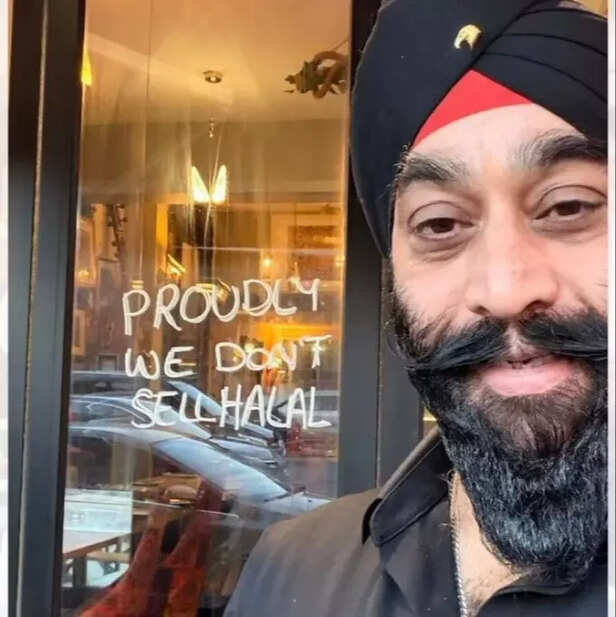
Image credit : X| @shilpa_cn| London arrest row clarified as police cite threatening video
As enquiries continue, the case serves as a reminder of how quickly local tensions can gain global attention in the digital age. It also highlights the importance of separating verified facts from assumptions, particularly when social media narratives begin to shape public opinion before official details emerge.
Is Ali Larijani really dead?
By Sneha Kumari

Is BGMI's new 4.3 update dropping soon?
By Sneha Kumari

Kristin Cabot opens up about Coldplay kiss cam incident
By Emmy Azad

Zendaya debunks viral wedding rumours with Tom Holland
By Simran Guleria

FBI’s Missy Peregrym opens up about heartbreaking death
By Emmy Azad

Royal purple is officially the color of 2026
By Sneha Kumari

Kangmin Lee questions Maggie Kang’s Oscars speech
By Emmy Azad
