
Will our pinky finger and tiny toes disappear? What evolution really says about this viral human body mystery
Nancy Jaiswal | Jul 27, 2026, 09:48 IST
Will humans eventually lose their pinky fingers and small toes? It is a question that keeps popping up online. From genetic myths to the role of toes in walking and balance, here is a simple look at what evolution really suggests.

Image credit : Magnific | Could future humans be born with just four fingers instead of five?
Take a look at your hand. Now focus on your pinky finger. Then glance down at your smallest toe. At first, they may seem like the least important parts of your body. They are tiny, often overlooked and rarely get much attention. Yet a surprisingly common question keeps appearing in conversations, classrooms and on social media: will humans eventually lose their pinky fingers and small toes through evolution?
It is an interesting idea because it sounds logical. If we do not use something much anymore, surely evolution would eventually get rid of it. But according to an article in TheTech , that is not really how genetics works. The belief that unused body parts automatically shrink or disappear over generations is considered a genetic myth. Our DNA currently instructs our bodies to develop five fingers on each hand, including the pinky. Simply using a finger less does not rewrite the DNA that future generations inherit.
The theory has survived for decades because it feels intuitive. Many people have heard claims that pinky fingers were longer in the past or that future humans will only have four fingers. But when you look closely at how evolution actually works, the story becomes far more interesting than a simple case of "use it or lose it".
Imagine you decide never to use your pinky finger again. It might sound silly, but even if you managed to do that for years, your children would still be born with pinkies. That is because your behaviour does not directly change the genetic instructions that are passed down to the next generation.
![Will humans eventually lose their pinky fingers and small toes?]() This is where many people get confused about evolution. Evolution is not a conscious process that removes body parts because they seem unnecessary. Instead, changes spread through populations when genetic variations offer some advantage or become more common through chance.
This is where many people get confused about evolution. Evolution is not a conscious process that removes body parts because they seem unnecessary. Instead, changes spread through populations when genetic variations offer some advantage or become more common through chance.
In simple terms, your DNA cannot tell whether you used your pinky to hold a coffee mug, type on a keyboard or play a musical instrument. The finger develops because the genetic blueprint says it should. That is why scientists do not see evidence that modern humans are currently losing their pinky fingers.
That does not mean it is impossible. Evolution can change almost any physical feature given enough time. But the conditions have to be right.
According to The Tech, one possible route would be natural selection. Imagine a hypothetical future where having a long pinky somehow reduces a person's chances of surviving or having children. Over many generations, people with shorter pinkies might become more common.
The problem is that nobody has identified such a disadvantage today. There is no clear evidence that having a pinky finger makes life harder. In fact, pinkies still help with grip and hand function. Without a strong evolutionary pressure pushing against them, there is little reason for them to disappear.
Another possibility involves something called the founder effect. This occurs when a small isolated group becomes the source of a much larger future population. If that small group happened to have shorter pinkies, the trait could become more common over time.
The article points to Amish communities in Pennsylvania as an example of how unusual traits can spread in isolated populations. In some groups, extra fingers and toes are more common because one of the community's founders carried a gene linked to that trait. The genetic characteristic spread because the population remained relatively isolated.
However, that is very different from saying all humans are heading towards a future without pinkies.
Read More: From missed gas leaks to joyless meals: Why losing your sense of smell is more serious than it sounds
The debate becomes even more interesting when we move from hands to feet. Many people assume small toes are nearly useless. After all, most of us do not use them to grab branches or hold objects.
![Many people have heard claims that pinky fingers were longer in the past]() But our toes still perform important jobs every day. According to Sam Westreich, PhD, our distant ancestors spent much of their lives in trees. Grip strength mattered enormously because falling could mean death. Many primates still use their feet to grasp branches, and their toes play a major role in movement.
But our toes still perform important jobs every day. According to Sam Westreich, PhD, our distant ancestors spent much of their lives in trees. Grip strength mattered enormously because falling could mean death. Many primates still use their feet to grasp branches, and their toes play a major role in movement.
As humans gradually adopted upright walking, the role of toes changed. They became less important for gripping objects but remained valuable for movement and stability. Toes help spread body weight across the foot, assist with balance and contribute to the push-off motion that occurs when we walk or run.
You can test this yourself. Try standing on one foot. Chances are your toes will automatically adjust and shift to help keep you upright. That small movement is a reminder that even tiny toes continue to serve a purpose.
Research highlighted by BBC News offers another clue about why our feet evolved the way they did. Scientists studied three-dimensional scans of toe bone joints from living primates, fossil relatives and modern humans. They then compared these structures across an evolutionary tree.
The study found that the modern human big toe evolved relatively late compared with other foot bones. According to lead author Dr Peter Fernandez of Marquette University, efficient walking and running on two feet became one of the defining characteristics of humans.
The big toe eventually developed into a more rigid structure that provides powerful push-off during walking and running. This adaptation helped humans move efficiently across the ground. However, it also meant sacrificing some of the flexibility and gripping ability seen in apes.
Dr Fernandez explained that our ancestors likely spent significant time both in trees and on the ground. As a result, evolution had to find a compromise. The foot gradually became better suited for walking while becoming less dexterous than an ape's foot.
For now, the answer appears to be yes. There is no evidence that humans are actively evolving towards a future without pinky fingers or small toes. The idea is fascinating, but it often oversimplifies how evolution works.
Not using a body part does not automatically remove it from future generations. For a feature to disappear, there usually needs to be a strong evolutionary reason or a series of unusual genetic events over a very long period.
What makes the discussion so interesting is that it reveals how many people still imagine evolution as a process with a clear goal. In reality, evolution is messy, unpredictable and driven by countless factors working over enormous stretches of time.
![Scientists do not see evidence that modern humans are currently losing their pinky fingers]() Pinky fingers or tiny toes, help us grip, balance, walk and move through the world. And unless something dramatic changes in the distant future, they are likely to remain part of the human body for a very long time.
Pinky fingers or tiny toes, help us grip, balance, walk and move through the world. And unless something dramatic changes in the distant future, they are likely to remain part of the human body for a very long time.
Read More: Wisdom teeth becoming obsolete? Why millions never grow third molars and what evolution may be doing to our jaws
The bigger story is not whether our pinkies or small toes will disappear. It is how these tiny features reveal the remarkable journey of human evolution itself. Even the smallest finger and the tiniest toe carry clues about where we came from, how we adapted and why our bodies still look the way they do today.
It is an interesting idea because it sounds logical. If we do not use something much anymore, surely evolution would eventually get rid of it. But according to an article in The
The theory has survived for decades because it feels intuitive. Many people have heard claims that pinky fingers were longer in the past or that future humans will only have four fingers. But when you look closely at how evolution actually works, the story becomes far more interesting than a simple case of "use it or lose it".
Why not using a pinky does not make it disappear
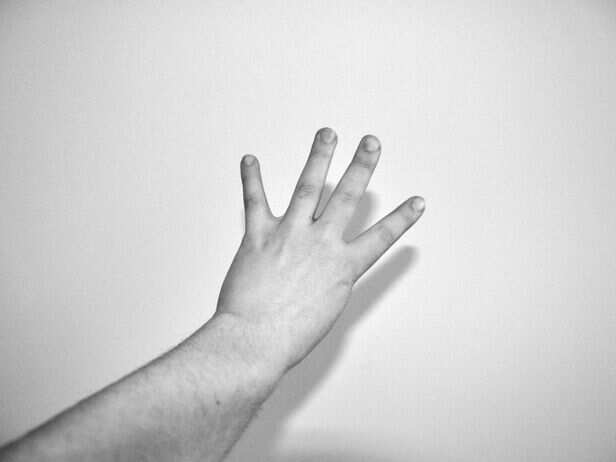
Image credit : Flickr | Will humans eventually lose their pinky fingers and small toes?
In simple terms, your DNA cannot tell whether you used your pinky to hold a coffee mug, type on a keyboard or play a musical instrument. The finger develops because the genetic blueprint says it should. That is why scientists do not see evidence that modern humans are currently losing their pinky fingers.
Could evolution remove the pinky in the future?
According to The Tech, one possible route would be natural selection. Imagine a hypothetical future where having a long pinky somehow reduces a person's chances of surviving or having children. Over many generations, people with shorter pinkies might become more common.
The problem is that nobody has identified such a disadvantage today. There is no clear evidence that having a pinky finger makes life harder. In fact, pinkies still help with grip and hand function. Without a strong evolutionary pressure pushing against them, there is little reason for them to disappear.
Another possibility involves something called the founder effect. This occurs when a small isolated group becomes the source of a much larger future population. If that small group happened to have shorter pinkies, the trait could become more common over time.
The article points to Amish communities in Pennsylvania as an example of how unusual traits can spread in isolated populations. In some groups, extra fingers and toes are more common because one of the community's founders carried a gene linked to that trait. The genetic characteristic spread because the population remained relatively isolated.
However, that is very different from saying all humans are heading towards a future without pinkies.
Read More: From missed gas leaks to joyless meals: Why losing your sense of smell is more serious than it sounds
What about our small toes?
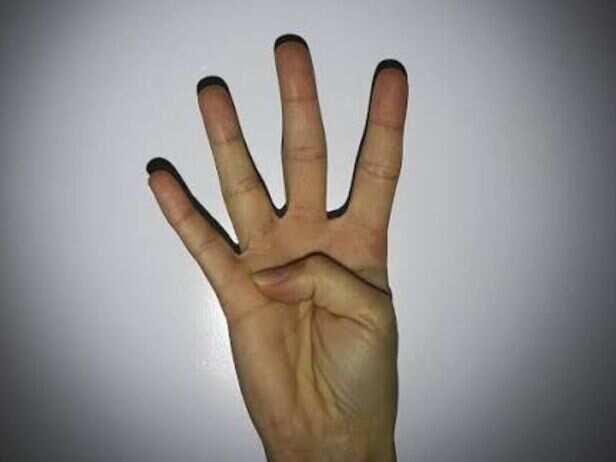
Image credit : PxHere | Many people have heard claims that pinky fingers were longer in the past
As humans gradually adopted upright walking, the role of toes changed. They became less important for gripping objects but remained valuable for movement and stability. Toes help spread body weight across the foot, assist with balance and contribute to the push-off motion that occurs when we walk or run.
You can test this yourself. Try standing on one foot. Chances are your toes will automatically adjust and shift to help keep you upright. That small movement is a reminder that even tiny toes continue to serve a purpose.
The big toe changed the game
The study found that the modern human big toe evolved relatively late compared with other foot bones. According to lead author Dr Peter Fernandez of Marquette University, efficient walking and running on two feet became one of the defining characteristics of humans.
The big toe eventually developed into a more rigid structure that provides powerful push-off during walking and running. This adaptation helped humans move efficiently across the ground. However, it also meant sacrificing some of the flexibility and gripping ability seen in apes.
Dr Fernandez explained that our ancestors likely spent significant time both in trees and on the ground. As a result, evolution had to find a compromise. The foot gradually became better suited for walking while becoming less dexterous than an ape's foot.
So are our pinkies and small toes safe?
Not using a body part does not automatically remove it from future generations. For a feature to disappear, there usually needs to be a strong evolutionary reason or a series of unusual genetic events over a very long period.
What makes the discussion so interesting is that it reveals how many people still imagine evolution as a process with a clear goal. In reality, evolution is messy, unpredictable and driven by countless factors working over enormous stretches of time.
Image credit : Pickpik | Scientists do not see evidence that modern humans are currently losing their pinky fingers
Read More: Wisdom teeth becoming obsolete? Why millions never grow third molars and what evolution may be doing to our jaws
The bigger story is not whether our pinkies or small toes will disappear. It is how these tiny features reveal the remarkable journey of human evolution itself. Even the smallest finger and the tiniest toe carry clues about where we came from, how we adapted and why our bodies still look the way they do today.
Are Gen Z couples dating or just building a couple brand in 2026?
By Nancy Jaiswal

Gen Z employees are too honest at work; Problem or progress?
By Nancy Jaiswal

Google effect: Is the Internet becoming our second memory bank?
By Nancy Jaiswal

Could sudden smell loss be telling you something very important?
By Nancy Jaiswal

The Westies S1E4 recap: Irish vendettas, mob hits & drug deals!
By Sinthya Banik

KATSEYE's Lara Raj faces 'performative' backlash over delayed support for Indian students
By Shivani Negi

Lewis Hamilton's Ferrari nightmare is getting worse with every race
By Nillohit Bagchi
