
Amid LPG shortage, Bengaluru man’s low-cost ‘rocket stove’ gains attention as restaurants explore it as practical alternative to rising fuel uncertainty
Simran Guleria | Mar 17, 2026, 21:09 IST
A Bengaluru man’s fuel-efficient ‘rocket stove’ is drawing attention amid LPG supply issues. Designed for rural use, the low-cost solution is now being explored by urban households and small restaurants.

As LPG shortages begin to disrupt kitchens across Bengaluru, an unlikely solution is drawing renewed attention. A simple, low-cost “rocket stove”, originally designed for rural households, is now being explored by city eateries struggling to keep up with rising fuel uncertainty. What began as a grassroots innovation is steadily turning into a practical talking point in the middle of an urban energy crunch.
![Freepik| Affordable stove emerges as LPG shortage hits kitchens]()
The stove, developed by 65-year-old Ashok Urs, a former Oil and Natural Gas Corporation professional, was never intended for restaurants or commercial use. Instead, it was created to address a long-standing challenge in rural India, where families rely heavily on firewood for cooking. Urs set out to design a system that would reduce fuel consumption while also cutting down harmful smoke exposure inside homes.
At its core, the rocket stove stands out for its efficiency. Built with a compact, L-shaped combustion chamber, the design improves airflow and enables fuel to burn at a higher temperature. This results in better heat output while using significantly less material compared to traditional open-fire methods.
![Freeepik| Rocket stove draws interest as LPG supply issues grow]()
Unlike LPG-based stoves, the rocket stove runs on easily available biomass such as twigs, dry leaves, coconut shells and other organic waste. These materials burn more completely due to the enhanced airflow, producing less smoke and requiring smaller quantities of fuel. For households in rural settings, this translates into reduced time spent collecting firewood and fewer health risks linked to prolonged smoke exposure.
Urs has demonstrated the stove at various public platforms, including events at the Indian Institute of Science, with the aim of spreading awareness about cleaner and more efficient cooking alternatives. Priced at around Rs 3,000, the stove remains accessible, making it a viable option for both low-income households and small-scale users.
While the stove was initially targeted at rural communities, the current LPG supply challenges have shifted attention towards its potential in urban spaces. In Bengaluru, where some restaurants are grappling with irregular gas availability, the idea of a low-cost, alternative cooking method has sparked curiosity.
![Freepik| Bengaluru innovation offers solution to LPG shortage]()
Small eateries, in particular, are beginning to assess whether the rocket stove could serve as a temporary backup during supply disruptions. Although it may not fully replace LPG for high-volume commercial kitchens, it offers a flexible and cost-effective stopgap in times of uncertainty. The growing interest highlights a broader shift in how urban consumers are approaching energy use. Rising costs and inconsistent supply are pushing both households and businesses to reconsider traditional fuel sources and explore more sustainable options.
The renewed focus on the rocket stove reflects more than just a response to a short-term shortage. It points to a larger conversation about efficiency, affordability and environmental impact. Innovations that were once seen as rural solutions are now finding relevance in cities, particularly as energy challenges become more widespread.
![Freepik| Fuel-saving stove gains traction amid LPG disruption]()
As Bengaluru navigates its current LPG constraints, Urs’s invention serves as a reminder that practical, low-tech ideas can still play a meaningful role in modern life. Whether as a temporary fix or a long-term supplement, the rocket stove is quietly reshaping how people think about cooking in times of change.

Image credit : Freepik| Affordable stove emerges as LPG shortage hits kitchens
The stove, developed by 65-year-old Ashok Urs, a former Oil and Natural Gas Corporation professional, was never intended for restaurants or commercial use. Instead, it was created to address a long-standing challenge in rural India, where families rely heavily on firewood for cooking. Urs set out to design a system that would reduce fuel consumption while also cutting down harmful smoke exposure inside homes.
A simple idea with powerful impact
At its core, the rocket stove stands out for its efficiency. Built with a compact, L-shaped combustion chamber, the design improves airflow and enables fuel to burn at a higher temperature. This results in better heat output while using significantly less material compared to traditional open-fire methods.
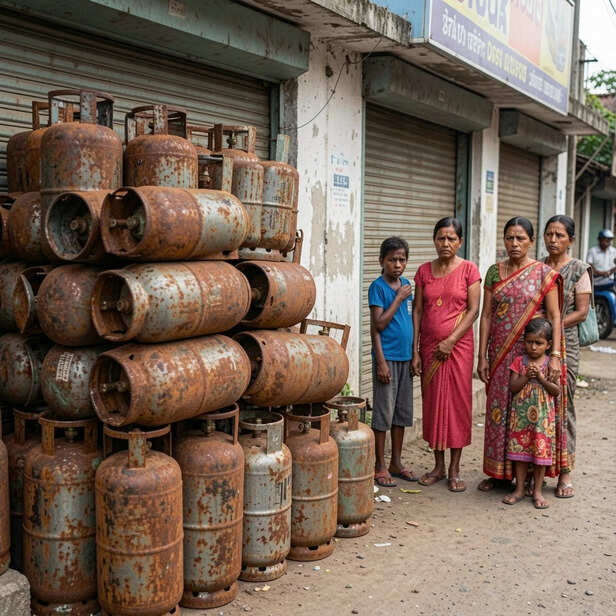
Image credit : Freeepik| Rocket stove draws interest as LPG supply issues grow
Unlike LPG-based stoves, the rocket stove runs on easily available biomass such as twigs, dry leaves, coconut shells and other organic waste. These materials burn more completely due to the enhanced airflow, producing less smoke and requiring smaller quantities of fuel. For households in rural settings, this translates into reduced time spent collecting firewood and fewer health risks linked to prolonged smoke exposure.
Bengaluru man’s ‘rocket stove’ draws attention amid LPG crisis
✍️@rishitaakhanna https://t.co/pONkgUsRjF
— The Hindu (@the_hindu) March 15, 2026
Urs has demonstrated the stove at various public platforms, including events at the Indian Institute of Science, with the aim of spreading awareness about cleaner and more efficient cooking alternatives. Priced at around Rs 3,000, the stove remains accessible, making it a viable option for both low-income households and small-scale users.
Urban interest grows amid fuel strain
While the stove was initially targeted at rural communities, the current LPG supply challenges have shifted attention towards its potential in urban spaces. In Bengaluru, where some restaurants are grappling with irregular gas availability, the idea of a low-cost, alternative cooking method has sparked curiosity.
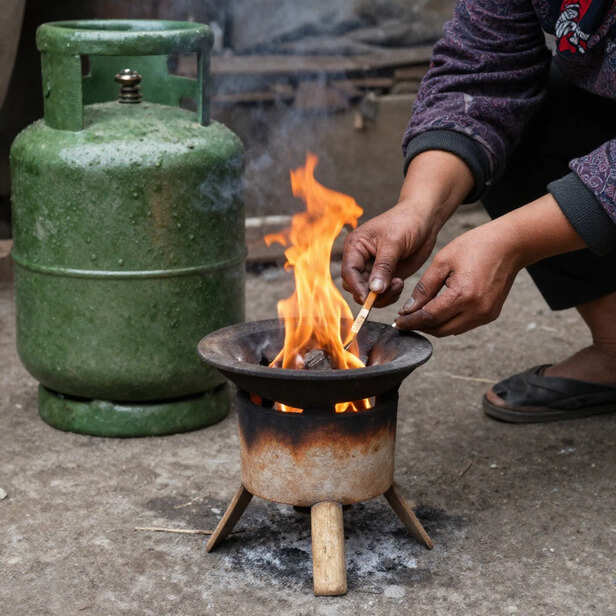
Image credit : Freepik| Bengaluru innovation offers solution to LPG shortage
Small eateries, in particular, are beginning to assess whether the rocket stove could serve as a temporary backup during supply disruptions. Although it may not fully replace LPG for high-volume commercial kitchens, it offers a flexible and cost-effective stopgap in times of uncertainty. The growing interest highlights a broader shift in how urban consumers are approaching energy use. Rising costs and inconsistent supply are pushing both households and businesses to reconsider traditional fuel sources and explore more sustainable options.
A rethink on everyday energy use
The renewed focus on the rocket stove reflects more than just a response to a short-term shortage. It points to a larger conversation about efficiency, affordability and environmental impact. Innovations that were once seen as rural solutions are now finding relevance in cities, particularly as energy challenges become more widespread.

Image credit : Freepik| Fuel-saving stove gains traction amid LPG disruption
As Bengaluru navigates its current LPG constraints, Urs’s invention serves as a reminder that practical, low-tech ideas can still play a meaningful role in modern life. Whether as a temporary fix or a long-term supplement, the rocket stove is quietly reshaping how people think about cooking in times of change.
Ex adult entertainer claims past romance with Timothée Chalamet
By Simran Guleria

What did Chrisean Rock say about her son on a recent podcast?
By Sneha Kumari

Who is Nicole Olivera?
By Sneha Kumari

US filmmaker held in India over insurgent training case
By Simran Guleria

Is Ali Larijani really dead?
By Sneha Kumari

Metropolitan Police clarify arrest in ‘no halal’ row
By Simran Guleria

Is BGMI's new 4.3 update dropping soon?
By Sneha Kumari
